
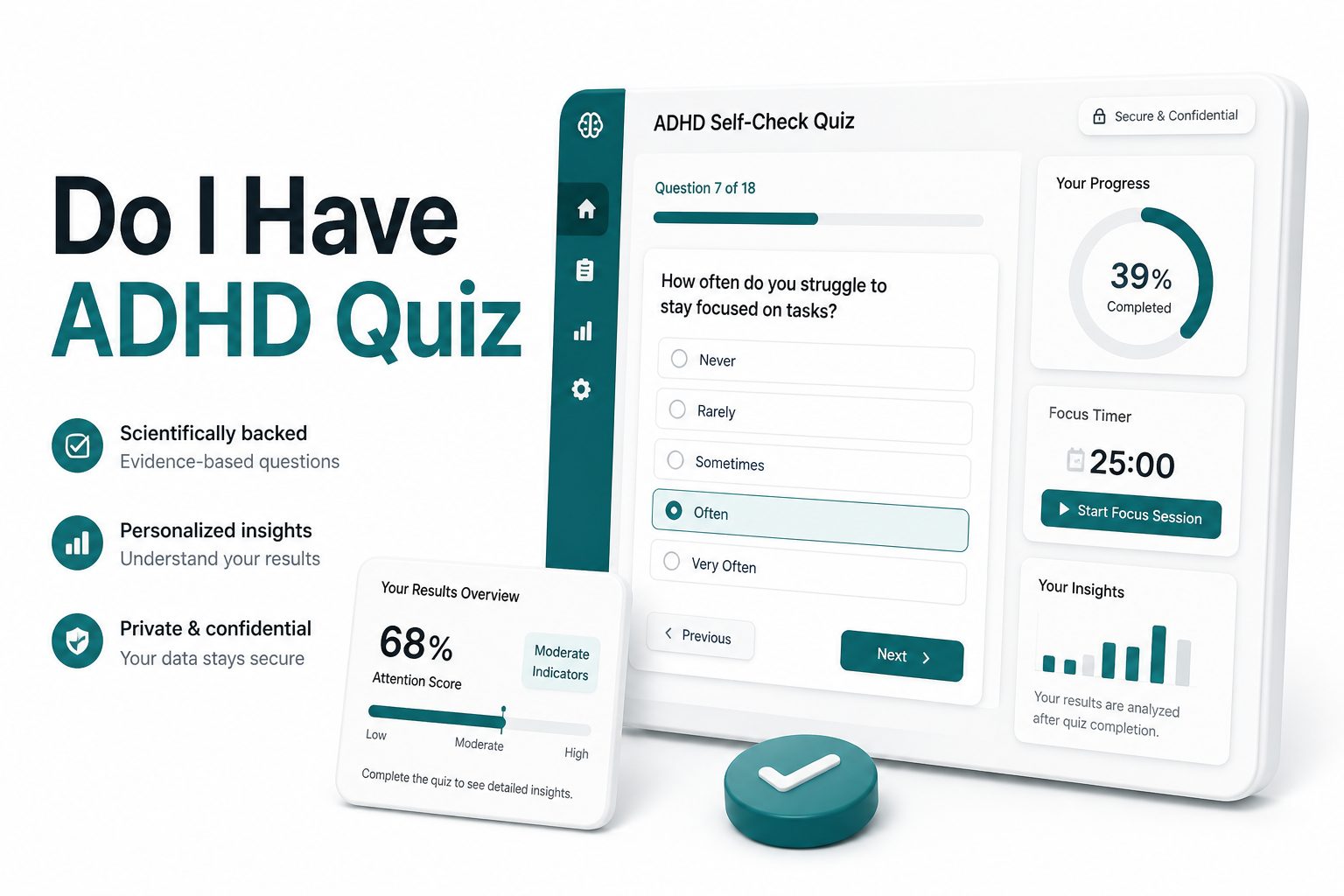
Feeling distracted, restless, forgetful, or constantly behind can make you wonder whether something deeper is going on. Many people search for a do i have adhd quiz because they want a simple way to sort normal stress from patterns that may point to attention-deficit hyperactivity disorder.
A quiz can be a useful starting point, especially when symptoms affect work, school, home life, money, or relationships. Still, it is not a diagnosis. ADHD is a neurodevelopmental condition that starts in childhood and may continue into adulthood. The goal of this article is to help you reflect honestly, recognize common signs, and decide whether speaking with a qualified professional makes sense.
What an ADHD Quiz Can and Cannot Tell You
An ADHD quiz can help you notice patterns in attention, impulsivity, organization, time management, and restlessness. It gives you a structured way to compare everyday struggles with common ADHD traits, especially if you have felt different from others for years.
A quiz cannot confirm ADHD, rule it out, or replace a clinical evaluation. Many symptoms overlap with anxiety, depression, sleep problems, trauma, substance use, thyroid issues, and high stress. A proper diagnosis looks at history, impairment, childhood symptoms, and other possible explanations.
Common Signs That Lead People to Take an ADHD Quiz
Many adults begin searching after repeated problems with deadlines, unfinished tasks, missed appointments, messy spaces, or emotional frustration. These issues often feel confusing because the person may be capable, intelligent, and motivated, yet still struggle to follow through consistently.
Others notice impulsive spending, interrupting, restlessness, racing thoughts, or difficulty relaxing. Some people do well during urgent situations but freeze on ordinary tasks. This uneven performance is one reason ADHD can be missed for years, especially in people who learned to compensate.
Quick Self-Reflection Checklist
Use this checklist as a starting point, not a diagnosis.
You often lose track of time, even with important tasks.
You start projects with energy but struggle to finish them.
You forget appointments, chores, messages, or daily responsibilities.
You avoid tasks that require sustained mental effort.
You interrupt, overshare, or act before thinking.
You feel internally restless, even when sitting still.
You misplace everyday items more often than others.
You have had similar patterns since childhood or adolescence.
You experience these difficulties in more than one area of life.
Inattention Symptoms That May Point Toward ADHD
Inattention is not simply being careless or lazy. It often shows up as difficulty sustaining focus, following instructions, organizing details, or completing tasks that are not immediately stimulating. A person may know exactly what matters but still struggle to begin or continue.
This can affect work reports, school assignments, household chores, emails, bills, and conversations. Some people describe it as having a mind that constantly jumps channels. Others can focus intensely on interesting tasks but lose focus quickly on routine responsibilities.
Hyperactivity and Restlessness in Adults
Hyperactivity in adults may look different from the childhood stereotype of running around a classroom. It often becomes internal restlessness, fidgeting, difficulty sitting through meetings, needing constant stimulation, or feeling uncomfortable during quiet, slow activities.
Some adults take on too many commitments because stillness feels irritating. Others talk rapidly, shift positions often, or feel driven by pressure. This restlessness may be mistaken for anxiety, ambition, or personality, which can delay recognition of ADHD.
How to Take a Do I Have ADHD Quiz Responsibly
When taking a do i have adhd quiz, answer based on long-term patterns rather than one difficult week. Think about the past six months, then look further back to childhood, school years, early jobs, and family feedback. ADHD symptoms must be persistent, not occasional.
Be honest about impact. Everyone procrastinates sometimes, but ADHD-related symptoms often create repeated consequences. These may include missed deadlines, relationship tension, academic struggles, job problems, financial disorganization, or daily exhaustion from trying to keep life together.
What Your Quiz Result Might Mean
A high score may suggest that your symptoms are worth discussing with a licensed clinician. It does not mean you definitely have ADHD. It simply means your answers match enough common traits that a deeper review may be useful.
A low score does not always mean there is no problem. Some people underreport symptoms because they normalize struggle, rely heavily on coping systems, or compare themselves only with equally overwhelmed peers. If life feels impaired, seeking help is still reasonable.
Practical Tips Before You Speak With a Professional
Write down specific examples from work, school, relationships, and home.
Note when symptoms started and whether they were present before age 12.
Ask a parent, sibling, or longtime friend what they remember.
List sleep habits, medications, caffeine use, and major stressors.
Bring past report cards, evaluations, or work reviews if available.
Track symptoms for two weeks before your appointment.
Mention anxiety, depression, substance use, or trauma history honestly.
Why ADHD Is Often Missed in Adults
Many adults were never evaluated as children because they were quiet, high-achieving, or able to mask symptoms. Some were called lazy, dramatic, scattered, careless, or too sensitive, rather than being assessed for attention and executive function challenges.
Adult responsibilities can expose symptoms that were previously hidden. A person may manage school with structure but struggle after college, parenting, remote work, or career changes. When external structure disappears, planning, prioritizing, and task initiation can become much harder.
ADHD in Women and Girls
ADHD in women and girls is often less visible because inattentive symptoms may be more prominent than disruptive behavior. Instead of obvious hyperactivity, there may be daydreaming, chronic overwhelm, perfectionism, emotional sensitivity, or quiet disorganization hidden behind strong effort.
Many women seek answers after burnout, motherhood, college, or demanding jobs increase the pressure. They may have been praised for achievement while privately struggling with time, clutter, focus, and emotional regulation. This can make an ADHD quiz feel unexpectedly validating.
Important Facts About ADHD
ADHD symptoms begin in childhood, even if diagnosis happens later.
Adults can have inattentive, hyperactive-impulsive, or combined presentations.
There is no single test that diagnoses ADHD by itself.
Symptoms must cause real impairment in daily life.
ADHD can occur alongside anxiety, depression, learning differences, and sleep problems.
Treatment may include medication, therapy, coaching, skills training, or accommodations.
A licensed professional is needed for a valid diagnosis.
The Difference Between ADHD and Normal Distraction
Modern life makes distraction easy. Phones, email, poor sleep, family stress, and demanding jobs can make almost anyone feel unfocused. The difference is usually persistence, severity, history, and impact across multiple areas of life.
ADHD is more likely when symptoms have been present for years and continue even when you care deeply. If you repeatedly fail to complete important tasks despite consequences, routines, reminders, and strong intentions, the pattern deserves closer attention.
ADHD and Executive Function
Executive function refers to mental skills that help you plan, prioritize, start tasks, regulate emotions, manage time, and hold information in mind. ADHD often affects these skills, which is why the problem can feel broader than simple distractibility.
A person may know what to do but struggle with activation. They may need urgency, novelty, interest, or external accountability to perform well. This gap between ability and execution is one of the most frustrating parts of ADHD.
Helpful Coping Strategies While You Wait for Answers
Use external systems instead of relying on memory. Calendars, alarms, visual lists, automatic payments, labeled storage, and written routines reduce the number of decisions your brain must manage during the day.
Make tasks smaller and more visible. “Clean the kitchen” can become “load dishwasher,” “wipe counter,” and “take trash out.” If focus is difficult, short timed sessions with breaks can make starting easier and reduce avoidance.
When to Seek a Professional ADHD Evaluation
Consider an evaluation if symptoms affect your work, studies, parenting, relationships, finances, driving, or emotional health. You do not need to wait until life falls apart. Repeated difficulty is enough reason to ask for help.
A clinician may ask about childhood behavior, school history, family patterns, current symptoms, mental health, sleep, substance use, and medical conditions. They may also use rating scales, interviews, and reports from people who know you well.
Helpful Resources to Read Next
If you want to learn more about symptoms, screening, and support options, read [Internal Link: Adult ADHD Symptoms] for a deeper look at how ADHD can appear in daily life.
For practical next steps after a high quiz score, see [Internal Link: ADHD Diagnosis and Treatment Options] to prepare for a conversation with a qualified provider.
What Happens After an ADHD Diagnosis
A diagnosis can bring relief, but it is only the beginning. Treatment plans vary depending on symptoms, health history, goals, and coexisting conditions. Some people benefit from medication, while others use therapy, coaching, workplace changes, or structured routines.
Good care should focus on function, not labels alone. The aim is to reduce daily friction, improve follow-through, protect relationships, and support mental health. Progress often comes from combining medical guidance with practical systems that fit real life.
Conclusion
Wondering whether you have ADHD can feel personal, confusing, and sometimes emotional. A quiz can help you name patterns that may have followed you for years, but it should be treated as a first step rather than a final answer.
If your symptoms are frequent, long-standing, and affecting more than one part of life, it may be time to speak with a licensed mental health professional or physician. Bring examples, be honest about your history, and ask about other possible causes too. Whether the answer is ADHD, stress, anxiety, sleep issues, or something else, clarity can help you choose better support. A do i have adhd quiz is most useful when it leads to informed action, not self-judgment.
FAQ
Can an online ADHD quiz diagnose me?No. An online quiz can highlight symptoms that may be worth discussing, but only a qualified professional can diagnose ADHD. A proper evaluation reviews history, impairment, childhood signs, and other conditions that can mimic ADHD.
What should I do if my quiz score is high?
Write down real examples of your symptoms and schedule an appointment with a licensed clinician. Include information about childhood behavior, work or school issues, sleep, mood, and any anxiety or depression symptoms.
Can adults develop ADHD later in life?
ADHD symptoms begin in childhood, although they may not be recognized until adulthood. Adult responsibilities can make symptoms more obvious, especially when structure decreases or demands increase at work, school, parenting, or daily life.
What conditions can look like ADHD?
Anxiety, depression, sleep disorders, trauma, substance use, thyroid problems, learning disabilities, and chronic stress can all cause ADHD-like symptoms. This is why a careful evaluation matters before assuming one explanation.
Is ADHD treatable?
Yes. ADHD can often be managed with treatment and support. Options may include medication, therapy, behavioral strategies, coaching, workplace accommodations, and practical systems for time management, planning, and organization.
0 Comments