
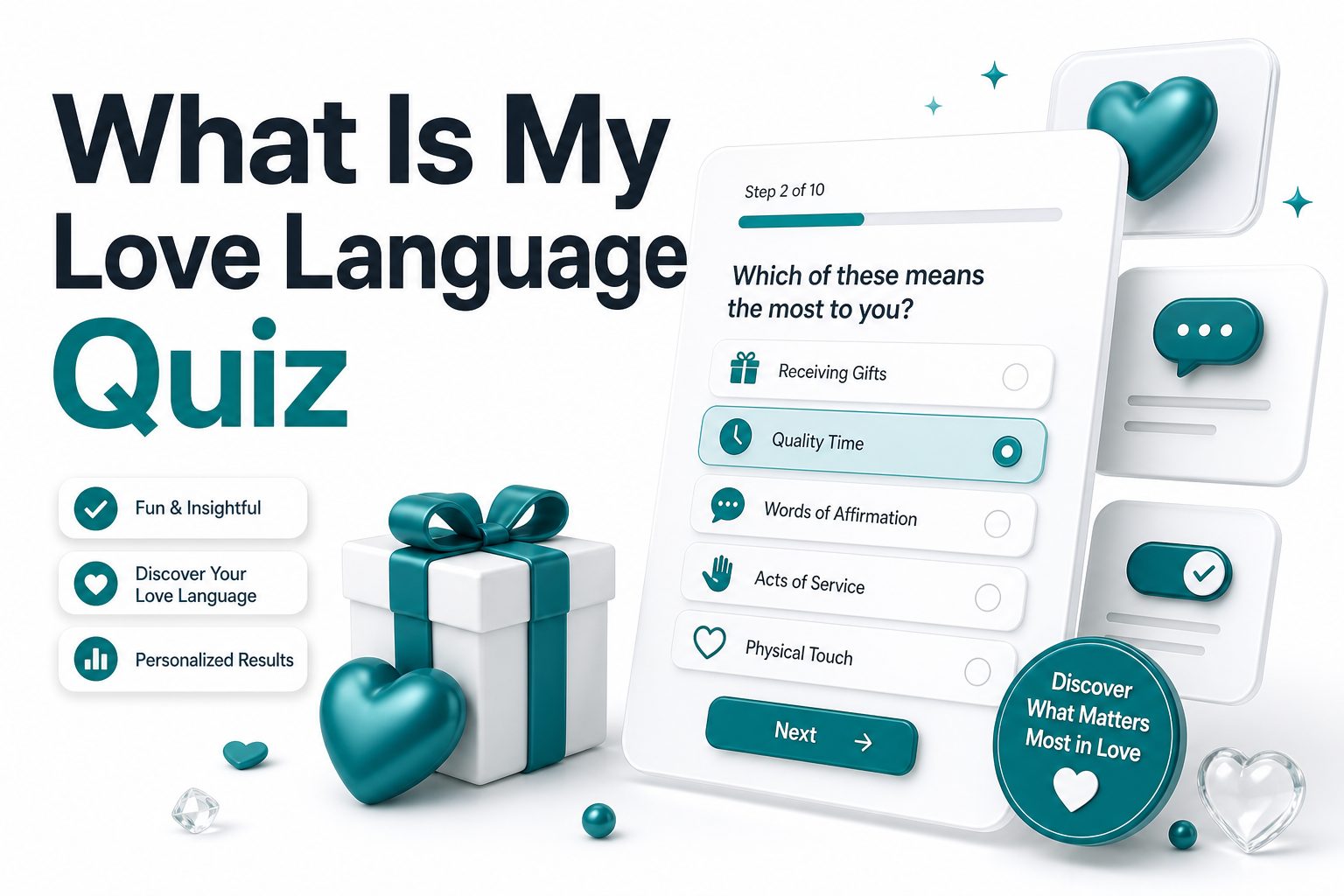
Love can feel simple in the beginning, then surprisingly confusing once real life settles in. One person may feel loved when their partner says thoughtful words, while another feels most cared for when someone helps with daily tasks, plans quality time, or offers physical affection. That mismatch does not mean the relationship is failing. It often means each person is expressing care in a different emotional language.
A what is my love language quiz can help you name the patterns behind what makes you feel valued. Instead of guessing why certain gestures matter so much, you get a clearer view of your emotional needs and the ways you naturally show love. The idea is not to put yourself in a box. It is to build better self-awareness, reduce misunderstandings, and create more meaningful connection in romantic relationships, friendships, and family life.
What Love Languages Mean
Love languages describe the main ways people tend to give and receive affection. The five common types are words of affirmation, quality time, acts of service, receiving gifts, and physical touch. Each one reflects a different emotional pathway for feeling seen, appreciated, and secure.
Most people relate to more than one love language, but one or two usually stand out. Your top result can explain why certain moments stay with you, why some efforts feel deeply meaningful, and why other loving gestures may not land as strongly.
Why a Love Language Quiz Is Helpful
A quiz gives structure to something many people feel but struggle to explain. It turns vague emotions into clearer language, helping you say, “This is what makes me feel loved,” without sounding demanding or critical.
It can also help couples stop repeating the same arguments. When one partner gives love through practical help and the other needs verbal reassurance, both may care deeply while still feeling unappreciated. A quiz makes that gap easier to spot and discuss.
Quick Signs Your Love Language May Be Clear
- You remember compliments long after they were said.
- You feel closest during uninterrupted one-on-one time.
- You notice when someone helps without being asked.
- You treasure thoughtful gifts because of the meaning behind them.
- You feel comforted by hugs, hand-holding, or sitting close.
- You feel hurt when your preferred kind of affection is missing.
- You naturally show love in the same way you wish to receive it.
The Five Love Languages Explained
Words of affirmation are about spoken or written appreciation. Compliments, encouragement, sincere thank-you messages, and thoughtful texts can carry deep emotional weight for someone with this love language. The words do not need to be dramatic; they need to feel specific and genuine.
Quality time centers on focused attention. This person feels loved when someone is fully present, listens closely, and makes room for shared experiences. It is less about expensive plans and more about being emotionally available without constant distractions.
Words of Affirmation in Daily Life
If words matter most to you, silence may feel heavier than intended. You may appreciate hearing “I love you,” but you may also need detailed reassurance, such as what your partner values about you or why they are proud of you.
This love language thrives on sincerity. Generic praise can feel flat, while one specific sentence can change the tone of an entire day. Written notes, voice messages, and direct appreciation often feel especially meaningful.
Quality Time in Daily Life
Quality time is not just being in the same room. It means shared attention, active listening, and moments where both people feel mentally present. A quiet walk, cooking together, or a phone-free dinner may mean more than a big event.
People with this love language often feel disconnected when plans are rushed or conversations are constantly interrupted. They usually value consistency, follow-through, and the feeling that someone genuinely wants to spend time with them.
How Each Love Language Often Feels
Love Language | What Feels Loving | What May Feel Hurtful
Words of affirmation | Encouraging words, praise, kind texts | Harsh criticism or emotional silence
Quality time | Focused attention and shared plans | Distraction, canceled plans, multitasking
Acts of service | Practical help and reliability | Broken promises or lack of effort
Receiving gifts | Thoughtful symbols of care | Forgotten occasions or careless gestures
Physical touch | Affectionate contact and closeness | Withholding affection or physical distance
Acts of Service and Practical Love
Acts of service are about easing someone’s burden. For this love language, love often looks like doing the dishes, handling an errand, fixing a problem, or stepping in before stress becomes overwhelming. The action communicates care through reliability.
This does not mean someone wants a servant or expects constant favors. It means effort matters. When a person notices what needs doing and follows through, it can feel like emotional support made visible.
Receiving Gifts as a Love Language
Receiving gifts is often misunderstood as materialistic, but the meaning usually runs deeper. For many people, a gift represents attention, memory, and thoughtfulness. It says, “I saw this and thought of you,” which can feel deeply personal.
The price is rarely the point. A favorite snack, a small souvenir, or a carefully chosen book can carry more meaning than an expensive item with no personal connection. The emotional value comes from being remembered.
Physical Touch and Emotional Safety
Physical touch includes hugs, kisses, cuddling, holding hands, and other forms of affectionate closeness. For people with this love language, touch can create calm, reassurance, and a strong feeling of belonging.
Consent and comfort always matter. Physical touch should never be assumed or demanded. In healthy relationships, both people communicate clearly about what feels affectionate, respectful, and welcome.
Checklist Before Taking a Love Language Quiz
- Choose a quiet moment when you are not upset or distracted.
- Answer based on what consistently matters, not only your current mood.
- Think about both romantic and non-romantic relationships.
- Notice what makes you feel hurt, overlooked, or distant.
- Avoid answering how you think you “should” feel.
- Retake the quiz later if your life circumstances change.
- Use the result as a conversation starter, not a final label.
How to Answer Quiz Questions Honestly
The best way to answer a love language quiz is to think about real patterns. Ask yourself what you crave when you feel disconnected and what makes you feel instantly reassured. Those emotional reactions often reveal more than idealized answers.
It also helps to separate appreciation from preference. You may enjoy gifts, compliments, and time together, but which one makes you feel most secure? A good quiz asks you to choose between meaningful options so your strongest needs become clearer.
Why Your Result May Change Over Time
Love language results are not fixed forever. Stress, parenthood, long-distance relationships, grief, burnout, or major life changes can shift what you need most. Someone who once valued quality time may later crave acts of service during a demanding season.
Your past experiences can also shape your result. If you grew up without much verbal encouragement, words of affirmation may feel powerful. If affection was rare, physical touch may become especially meaningful in safe adult relationships.
Common Mistakes People Make
One common mistake is treating love languages like strict personality types. They are better used as flexible clues. You are not limited to one form of affection, and your partner should not be reduced to a single category either.
Another mistake is using results to keep score. Saying “my love language is acts of service” should not become a way to criticize every missed task. The goal is clearer communication, not a new standard for blame.
Tips for Better Quiz Results
1. Answer from lived experience, not what sounds romantic.
2. Notice what you miss most when it is absent.
3. Think about repeated patterns across different relationships.
4. Avoid choosing answers only because your partner prefers them.
5. Read your second-highest result, since it may matter almost as much.
6. Talk about examples, not just labels.
7. Revisit your result during major life transitions.
Using Your Love Language in a Relationship
Once you know your love language, share it in practical terms. Instead of saying, “I need quality time,” explain what that means. You might say that a weekly dinner without phones helps you feel close and emotionally steady.
Your partner may need examples too. If their love language is words of affirmation, ask what kind of words feel meaningful. Some people want encouragement, while others value gratitude, reassurance, or recognition of effort.
How Couples Can Use Quiz Results Together
Taking the quiz together can make the conversation feel less personal and more collaborative. You can compare results, talk about what surprised you, and identify small habits that would help each person feel more cared for.
The most useful part comes after the quiz. Choose one or two actions each person can practice during the week. Small, consistent changes usually work better than dramatic promises that fade after a few days.
Love Languages Outside Romantic Relationships
Love languages also show up in friendships, families, and workplace relationships. A friend may feel cared for through regular check-ins, while a sibling may value help during stressful moments. The framework can improve many kinds of connection.
In professional settings, the idea should be used carefully. Physical touch and intimate gestures are not appropriate workplace tools, but appreciation, thoughtful support, and focused attention can still strengthen trust and morale.
Practical Ways to Show Each Love Language
Words of affirmation:
Send a sincere message, name a specific strength, or say thank you for something small. Avoid empty flattery. A single honest sentence often means more than a long speech that feels rehearsed.
Quality time:
Schedule focused time and protect it. Put away your phone, ask better questions, and listen without rushing to fix everything. Presence is the real gift.
Acts of service:
Take one task off their plate. Handle something they find stressful, follow through on promises, and notice practical needs before they turn into frustration.
Receiving gifts:
Choose something personal rather than expensive. A small item connected to a memory, interest, or inside joke can feel thoughtful and emotionally rich.
Physical touch:
Offer affection in ways that feel welcome. A hug after a hard day, sitting close during a movie, or holding hands can communicate warmth without words.
Self-Reflection Prompts After the Quiz
- What result felt most accurate, and why?
- Which result surprised you the most?
- What loving gesture do you often overlook from others?
- How do you usually show care when someone matters to you?
- What do you need more of during stressful seasons?
- What specific example can you share with your partner or friend?
- What small habit would help you feel more connected this week?
When Love Languages Do Not Match
Different love languages are common. A mismatch does not mean two people are incompatible. It simply means affection may need translation. One person may clean the kitchen to show love, while the other waits to hear comforting words.
The key is learning to receive love in your partner’s language while also asking clearly for what you need. Healthy relationships make room for both. You can appreciate their effort and still explain what helps you feel closer.
When a Quiz Is Not Enough
A quiz can be useful, but it cannot solve deeper relationship problems on its own. If there is ongoing resentment, emotional distance, control, betrayal, or repeated conflict, the issue may need more than better love language awareness.
In those cases, honest conversation, boundaries, or professional support may be needed. Love languages work best in relationships where both people are willing to listen, adjust, and care about each other’s emotional experience.
How to Talk About Your Result Without Pressure
Start with curiosity rather than complaint. You might say, “I realized words matter to me more than I thought,” instead of “You never say anything nice.” The first approach invites conversation; the second can make someone defensive.
Be specific about one helpful change. For example, ask for a goodnight text while traveling, a weekly walk, or help with a recurring chore. Clear requests are easier to meet than broad emotional expectations.
Internal Resources for Stronger Relationships
If you want to keep learning about emotional connection, read our guide on [Internal Link: Healthy Relationship Communication]. It pairs well with love language results because communication turns self-awareness into real daily habits.
You may also find value in [Internal Link: Relationship Compatibility Quiz], especially if you want to compare emotional needs, conflict styles, and expectations. These tools work best when they lead to honest, respectful conversations.
Benefits of Knowing Your Love Language
- You can explain your needs with less frustration.
- Your partner or loved ones get clearer examples of what helps.
- You become more aware of how others may show care differently.
- Small gestures start to feel more intentional.
- Misunderstandings become easier to discuss.
- Emotional connection can improve without major lifestyle changes.
- You learn how to give love in ways others can better receive.
Conclusion
A love language result is not a rulebook, but it can give you useful language for something many people struggle to explain. When you know what helps you feel valued, you can ask for affection more clearly and recognize the care others are already trying to give.
The real value comes from using the result with maturity. Share examples, listen to the other person’s needs, and make small changes that fit your daily life. A what is my love language quiz can be a simple starting point for better communication, warmer connection, and fewer missed signals in the relationships that matter most.
FAQ
What is the most common love language?
Quality time and words of affirmation are often reported as common results, but this varies by person and relationship. Your own result depends on what makes you feel most valued, secure, and emotionally connected.
Can I have more than one love language?
Yes, many people have two strong love languages. One may matter most during normal life, while another becomes more important during stress, distance, conflict, or major change.
Is a love language quiz accurate?
A quiz can be helpful when you answer honestly, but it is not a clinical test. Treat the result as a reflection tool and compare it with your real relationship patterns.
Can love languages change with age?
They can change as your life changes. New responsibilities, past experiences, emotional healing, or different relationship dynamics may shift what kind of affection feels most meaningful.
Should couples take the quiz together?
Yes, taking it together can lead to useful conversation. Compare your results, share examples, and choose small actions each person can practice instead of treating the results as fixed labels.
0 Comments