
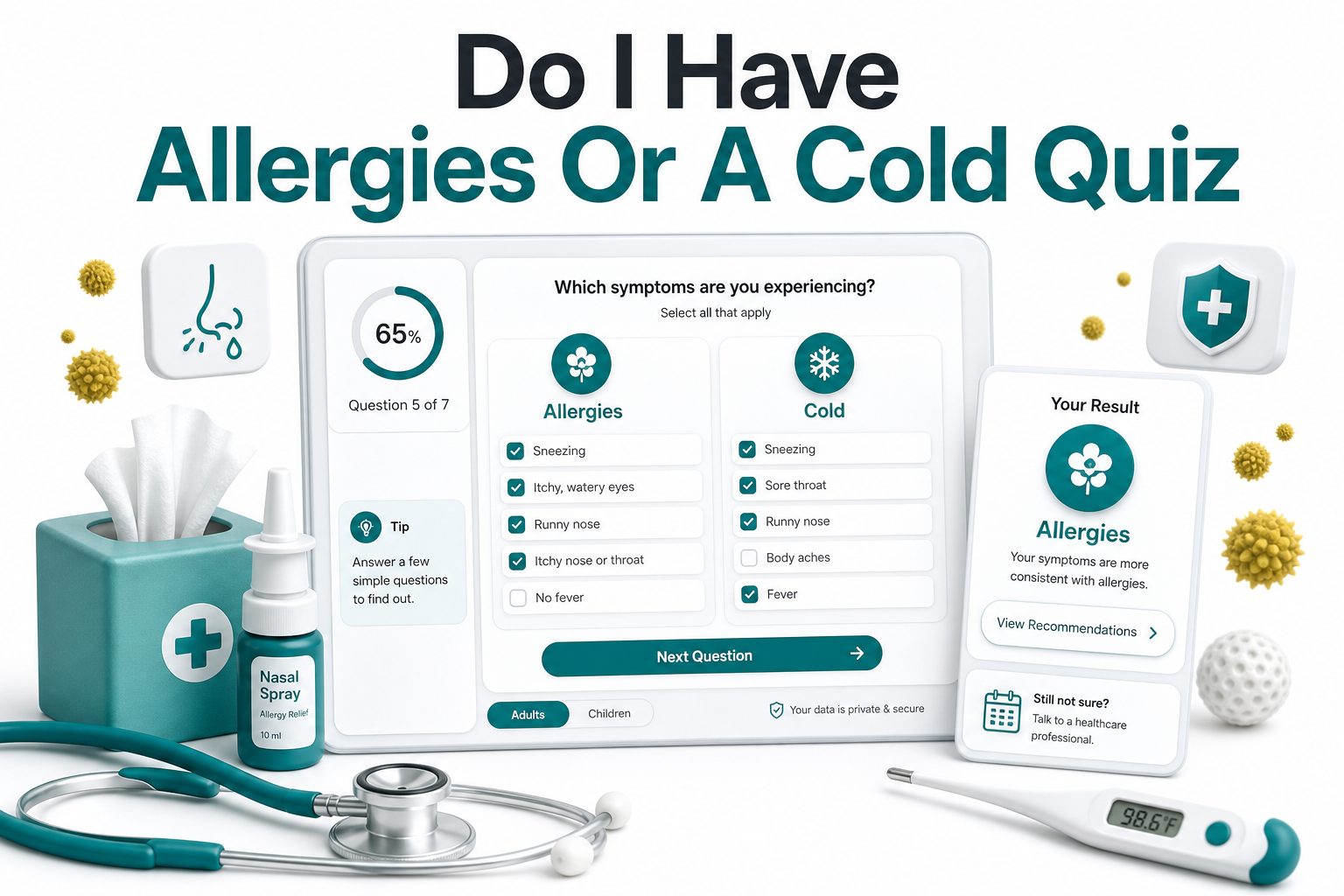
A runny nose can make a normal day feel twice as long, especially when you cannot tell whether you are dealing with seasonal allergies or a cold. Both can bring sneezing, congestion, fatigue, and a pile of tissues, yet the causes and best treatments are not the same. That is why a do i have allergies or a cold quiz can be a useful starting point.
The goal is not to diagnose yourself with certainty. Instead, a symptom-based quiz helps you notice patterns: how quickly symptoms started, whether your eyes itch, how long you have felt sick, and whether fever or body aches are present. Those clues can point you toward better next steps, from allergy control to cold care.
This guide walks through the signs that matter most, gives you a practical quiz-style framework, and explains when symptoms deserve medical attention. By the end, you should have a clearer sense of what your body is telling you.
Allergies and Colds Have Different Causes
A cold is caused by a virus that infects the upper respiratory tract. Your immune system responds to that infection, which leads to congestion, sore throat, coughing, sneezing, and sometimes a mild fever or body aches. Colds are contagious and often spread through droplets or contaminated surfaces.
Allergies happen when your immune system reacts to a trigger such as pollen, dust mites, mold, or pet dander. The trigger is not contagious, but your body treats it like a threat. That reaction can cause sneezing, nasal congestion, itchy eyes, and postnasal drip.
The Most Reliable Symptom Clues
Itchy, watery eyes are one of the strongest clues that allergies may be involved. Colds can irritate the eyes, but intense itching is much more typical of allergic rhinitis. An itchy nose, throat, or roof of the mouth also points toward an allergy pattern.
Fever, chills, and body aches lean more toward an infection. A cold may bring a low-grade fever, especially early on, while allergies usually do not cause fever. If your symptoms began with a scratchy throat and general tiredness, a cold becomes more likely.
Quick Symptom Checklist
Use this checklist as a simple first pass before taking a deeper look at your symptoms.
- Itchy eyes: more likely allergies
- Fever: more likely a cold or another infection
- Body aches: more likely a cold
- Clear runny nose: can happen with both
- Symptoms after pet, dust, pollen, or mold exposure: more likely allergies
- Symptoms after being around someone sick: more likely a cold
- Symptoms lasting weeks: more likely allergies
- Symptoms improving within 7 to 10 days: more likely a cold
How Symptom Timing Helps
Timing can separate allergies from a cold better than any single symptom. A cold usually builds over a day or two, peaks within a few days, then gradually improves. Adults often feel noticeably better within a week, although a cough may linger longer.
Allergies often appear quickly after exposure to a trigger. You may feel fine indoors, then start sneezing after mowing the lawn or walking through a park. Symptoms may also return at the same time each year, especially during tree, grass, or ragweed pollen seasons.
How Long Symptoms Usually Last
A cold usually has a beginning, middle, and end. It may start with a sore throat, move into congestion and coughing, then fade. If your symptoms are clearly improving after several days, a cold is a reasonable possibility.
Allergy symptoms can last as long as exposure continues. Seasonal allergies may continue for weeks, while indoor allergies can show up year-round. If your “cold” keeps coming back without fever and seems tied to your environment, allergies deserve serious consideration.
Cold vs Allergy Comparison Table
Symptom or Pattern | More Common With a Cold | More Common With Allergies
Runny nose | Yes | Yes
Stuffy nose | Yes | Yes
Sneezing | Yes | Yes
Itchy eyes | Rare | Common
Fever | Sometimes | No
Body aches | Sometimes | Rare
Sore throat | Common | Sometimes from postnasal drip
Cough | Common | Sometimes
Contagious | Yes | No
Duration | Usually days to about two weeks | Days to months with exposure
Seasonal pattern | Possible | Common
A Practical Do I Have Allergies or a Cold Quiz
Answer these questions honestly, based on your current symptoms rather than what usually happens. If most of your answers fall on the allergy side, allergies may be more likely. If they fall on the cold side, a viral infection may fit better.
This quiz is not a medical diagnosis, but it can organize the clues. If your symptoms are severe, unusual, worsening, or linked with breathing trouble, skip the quiz mindset and contact a healthcare professional for proper guidance.
Quiz Questions to Ask Yourself
Did your symptoms start suddenly after exposure to pollen, dust, pets, or mold? That pattern leans toward allergies. Did symptoms begin after contact with someone who was sick, especially with a sore throat or tired feeling? That pattern leans toward a cold.
Do your eyes, nose, or throat itch? Allergies become more likely. Do you have fever, chills, muscle aches, or a strong sick feeling? A cold, flu, COVID-19, or another infection may be more likely than simple seasonal allergies.
Quiz Result Guide
Mostly allergy clues:
-
- Itchy or watery eyes
- Symptoms after outdoor or indoor triggers
- No fever
- Repeated seasonal pattern
- Symptoms lasting more than two weeks
Mostly cold clues:
-
- Sore throat at the start
- Fever or mild body aches
- Symptoms after sick contact
- Gradual improvement within 7 to 10 days
- Cough that follows congestion
Mixed clues:
- Congestion with cough
- Fatigue without fever
- Clear mucus
- Symptoms during allergy season
- Recent exposure to illness and allergens
Why Itchy Eyes Matter So Much
Itchy eyes are strongly associated with allergies because histamine affects the eyes, nose, and throat. People with seasonal allergies often describe rubbing their eyes, waking with puffiness, or noticing redness after being outdoors. These eye symptoms may occur alongside repeated sneezing.
Colds can cause watery eyes from irritation, but they usually do not create the same persistent itch. If your eyes are the most annoying part of your illness, especially without fever, allergies may be the better fit.
Why Sore Throat Can Be Confusing
A sore throat often appears early in a cold because the virus irritates the throat. It may come with fatigue, swollen-feeling glands, or a scratchy voice. As the cold progresses, nasal congestion and cough may become more noticeable.
Allergies can also cause throat discomfort through postnasal drip. In that case, the throat may feel tickly, dry, or irritated rather than sharply painful. If the sore throat comes and goes with drainage, dust, or pollen exposure, allergies remain possible.
Key Signs That Point Toward Allergies
These patterns often suggest allergic rhinitis rather than a cold.
- Symptoms repeat during the same season
- Sneezing comes in repeated bursts
- Eyes are itchy, red, watery, or puffy
- Symptoms worsen after outdoor exposure
- Symptoms worsen around pets, dust, or mold
- No fever is present
- Nasal drainage is usually clear
- Symptoms continue while exposure continues
What Nasal Mucus Can and Cannot Tell You
Many people assume clear mucus means allergies and colored mucus means infection. That is too simple. Clear drainage can occur with both allergies and colds, especially early on. Thicker mucus can happen as a cold progresses or when nasal passages become irritated.
Color alone should not drive your decision. Look at the full pattern: fever, aches, duration, exposure, itching, and whether symptoms are improving. Mucus can be one clue, but it is not reliable enough to answer the question by itself.
The Role of Coughing
Cough is common with colds because viruses irritate the throat and airways. It may begin after a sore throat or congestion and linger after the worst symptoms improve. A cough that follows a clear cold pattern is usually not surprising.
Allergies can also cause coughing, usually from postnasal drip or airway sensitivity. This cough may feel tickly and may worsen at night or after exposure to allergens. If wheezing or shortness of breath occurs, medical advice is important.
Common Triggers That Support an Allergy Pattern
Pay attention to where symptoms happen, not only what they feel like.
- Tree pollen in spring
- Grass pollen in late spring and summer
- Ragweed pollen in late summer and fall
- Dust mites in bedding, carpets, and upholstery
- Pet dander from cats, dogs, and other animals
- Mold in damp rooms, basements, or outdoor leaves
- Indoor dust stirred up by cleaning or heating systems
When Fever Changes the Picture
Fever is one of the clearest signals that your body may be fighting an infection. Allergies do not typically cause fever. If you have a temperature along with congestion, sore throat, or aches, a cold or another respiratory illness is more likely.
A high fever, severe fatigue, chest pain, or shortness of breath should not be treated as a routine cold. Flu, COVID-19, RSV, sinus infection, and other conditions can overlap with cold symptoms and may require testing or care.
When Fatigue Is Hard to Read
Fatigue can happen with both allergies and colds, which makes it less useful by itself. A cold may make you feel run-down because your immune system is fighting a virus. That tiredness often comes with sore throat, cough, or body aches.
Allergies can also drain your energy, especially when congestion disrupts sleep. If you wake up stuffy, breathe through your mouth at night, or deal with constant sneezing, fatigue may follow even without infection.
Important Facts About Fever and Fatigue
Keep these points in mind when weighing your symptoms.
- Allergies usually do not cause fever
- Colds may cause low-grade fever
- Flu often feels more intense than a cold
- COVID-19 can resemble a cold or allergies
- Fatigue alone does not confirm either condition
- Poor sleep from congestion can worsen tiredness
- Severe or worsening fatigue deserves medical attention
How Season and Location Affect Symptoms
Seasonal patterns can be very helpful. If you feel “sick” every spring when trees bloom or every fall when ragweed rises, allergies may be the real cause. Symptoms that appear during yard work, hiking, or windy days also fit that pattern.
Indoor allergies may be less obvious because they can happen any time. Dust mites, mold, and pet dander can cause symptoms in winter, especially when windows stay closed. If symptoms improve away from home, indoor allergens may be involved.
How Contagion Helps You Decide
Colds are contagious, so recent exposure matters. If a coworker, child, partner, or friend had similar symptoms a few days before yours began, that raises the odds of a viral cold. Shared air and shared surfaces can both play a role.
Allergies do not spread from person to person. If no one around you is sick and your symptoms track with pollen counts or household triggers, allergies become more likely. For more help with seasonal patterns, see [Internal Link: Seasonal Allergy Symptoms].
Home Care for Allergy-Like Symptoms
If your symptoms point toward allergies, reducing exposure can make a real difference. Keep windows closed on high-pollen days, shower after outdoor time, wash bedding regularly, and use a high-quality vacuum if dust or pet dander is a concern.
Over-the-counter antihistamines, saline rinses, and nasal steroid sprays may help many people. Use medicines as directed, and ask a pharmacist or clinician if you have other health conditions, take other medications, or are choosing treatment for a child.
Home Care for Cold-Like Symptoms
Cold care focuses on comfort while your body clears the virus. Rest, fluids, saline spray, humidified air, and throat lozenges may ease symptoms. Pain relievers can help with headache, sore throat, or mild body aches when used according to label directions.
Antibiotics do not treat viral colds. Decongestants or cough medicines may help some adults, but they are not right for everyone. If symptoms worsen instead of improving, or you have risk factors, it is wise to contact a healthcare professional.
Simple Care Tips by Symptom
Use symptom-targeted care instead of taking several products you may not need.
- Congestion: saline rinse, steam, humidified air, short-term decongestant if appropriate
- Itchy eyes: allergen avoidance, cool compress, allergy eye drops if suitable
- Sore throat: warm fluids, lozenges, pain reliever if appropriate
- Sneezing: allergen control, antihistamine if allergy pattern is likely
- Cough: fluids, honey for adults and children over one year, medical care if severe
- Fatigue: rest, hydration, sleep support, reassessment if worsening
When to Consider Testing
Testing can matter when symptoms overlap. COVID-19, flu, and RSV can all cause cold-like symptoms, and some people have mild illness that resembles allergies. If you have fever, known exposure, high-risk household members, or symptoms before travel or events, testing may be sensible.
Allergy testing may help if symptoms are frequent, seasonal, or hard to control. A clinician or allergist can identify specific triggers, which helps you target avoidance and treatment instead of guessing. Testing is especially useful when symptoms interfere with sleep, work, or school.
When to Call a Healthcare Professional
Seek medical advice if symptoms are severe, last longer than expected, or keep returning. You should also call if you have wheezing, shortness of breath, chest pain, dehydration, severe sinus pain, or a fever that is high or persistent.
People with asthma, COPD, heart disease, immune system problems, pregnancy, or very young or older age should be more cautious. What seems like a simple cold or allergy flare can cause more serious complications in higher-risk groups. See [Internal Link: Sinus Infection Symptoms] if facial pressure becomes a concern.
Red Flags That Need Prompt Attention
Do not rely on a quiz if these symptoms appear.
- Trouble breathing
- Chest pain or pressure
- Blue lips or face
- Confusion or fainting
- Severe dehydration
- High or persistent fever
- Wheezing that is new or worsening
- Symptoms improving then suddenly getting worse
- Severe facial pain with fever
- Symptoms in a high-risk person
How to Track Symptoms for Better Answers
A simple symptom log can make patterns much clearer. Write down when symptoms start, where you were, what the weather was like, whether you were around pets or dust, and whether anyone nearby was sick. Include medicines used and how well they worked.
After a week or two, the pattern often becomes easier to see. Repeated symptoms after outdoor exposure suggest allergies. A one-time illness that steadily improves suggests a cold. This record can also help a clinician give better advice if you need care.
How Medication Response Can Offer Clues
If an antihistamine improves sneezing, itching, and watery eyes, allergies may be involved. Nasal steroid sprays can also help allergy-related congestion, though they may take several days of regular use to work fully. Response to treatment is useful but not perfect.
Cold symptoms may improve with rest, fluids, saline, and time. Some cold remedies ease discomfort without changing the cause. If medication gives only partial relief, do not assume you chose wrong; congestion and cough often have more than one contributing factor.
Helpful Symptom Tracking Template
Copy this structure into a note and update it daily.
- Date symptoms started
- Main symptoms
- Fever present or absent
- Eye itching present or absent
- Recent sick contacts
- Recent pollen, pet, dust, or mold exposure
- Medicines used
- Response to medicines
- Sleep quality
- Symptoms better, worse, or unchanged
- Notes for clinician if symptoms continue
Why Mixed Symptoms Are Common
It is possible to have allergies and catch a cold at the same time. Allergies can inflame nasal passages, and then a virus can add sore throat, cough, or fever. This overlap can make symptoms feel stronger and harder to interpret.
Mixed cases require practical thinking. Treat the symptoms you can, reduce allergen exposure, rest, and monitor for red flags. If fever appears, symptoms worsen after initial improvement, or breathing changes, it is time to get medical guidance.
How to Use a Quiz Responsibly
A quiz works best as a decision aid, not a final answer. It can help you decide whether allergy care, cold care, testing, or medical advice makes the most sense. It should never replace professional care when symptoms are severe or unusual.
Use your answers alongside common sense. If you feel mildly congested every pollen season, allergy steps are reasonable. If you feel suddenly ill with fever and aches, think infection. If you are unsure, testing or a clinician’s advice can prevent delays.
Conclusion
Telling allergies from a cold is easier when you focus on patterns rather than one symptom. Itchy eyes, repeated seasonal timing, and symptoms linked to pollen, pets, dust, or mold point toward allergies. Fever, body aches, sore throat at the start, and gradual recovery over several days point more toward a cold.
A symptom quiz can help you organize those clues, especially when congestion and sneezing make everything feel the same. Still, your health history, exposure risks, and symptom severity matter. When breathing is affected, fever is persistent, symptoms keep worsening, or you have a higher-risk condition, medical advice is the safer choice.
Use this do i have allergies or a cold quiz approach as a practical starting point. Track your symptoms, notice triggers, choose care that fits the pattern, and get help when the picture is unclear or concerning.
FAQ
Can allergies feel exactly like a cold?
Yes, allergies can feel very similar to a cold because both may cause sneezing, congestion, runny nose, and cough. Itching, repeated seasonal timing, and lack of fever often make allergies more likely.
How many days does a cold usually last?
Many colds improve within about a week, though some symptoms can last longer. A cough may linger after congestion improves. Symptoms that continue for weeks without fever may suggest allergies or another issue.
Can allergies cause a sore throat?
Allergies can cause a sore throat when postnasal drip irritates the throat. It often feels tickly, dry, or scratchy. A painful sore throat with fever or body aches is more consistent with infection.
Should I stay home with allergies?
Allergies are not contagious, so staying home is usually not necessary unless symptoms are disruptive. If you have fever, new body aches, or possible exposure to illness, consider infection precautions and testing.
When should I see a doctor for congestion?
See a doctor if congestion comes with trouble breathing, chest pain, high fever, severe facial pain, symptoms lasting longer than expected, or repeated episodes. People with asthma or other chronic conditions should be more cautious.
0 Comments