
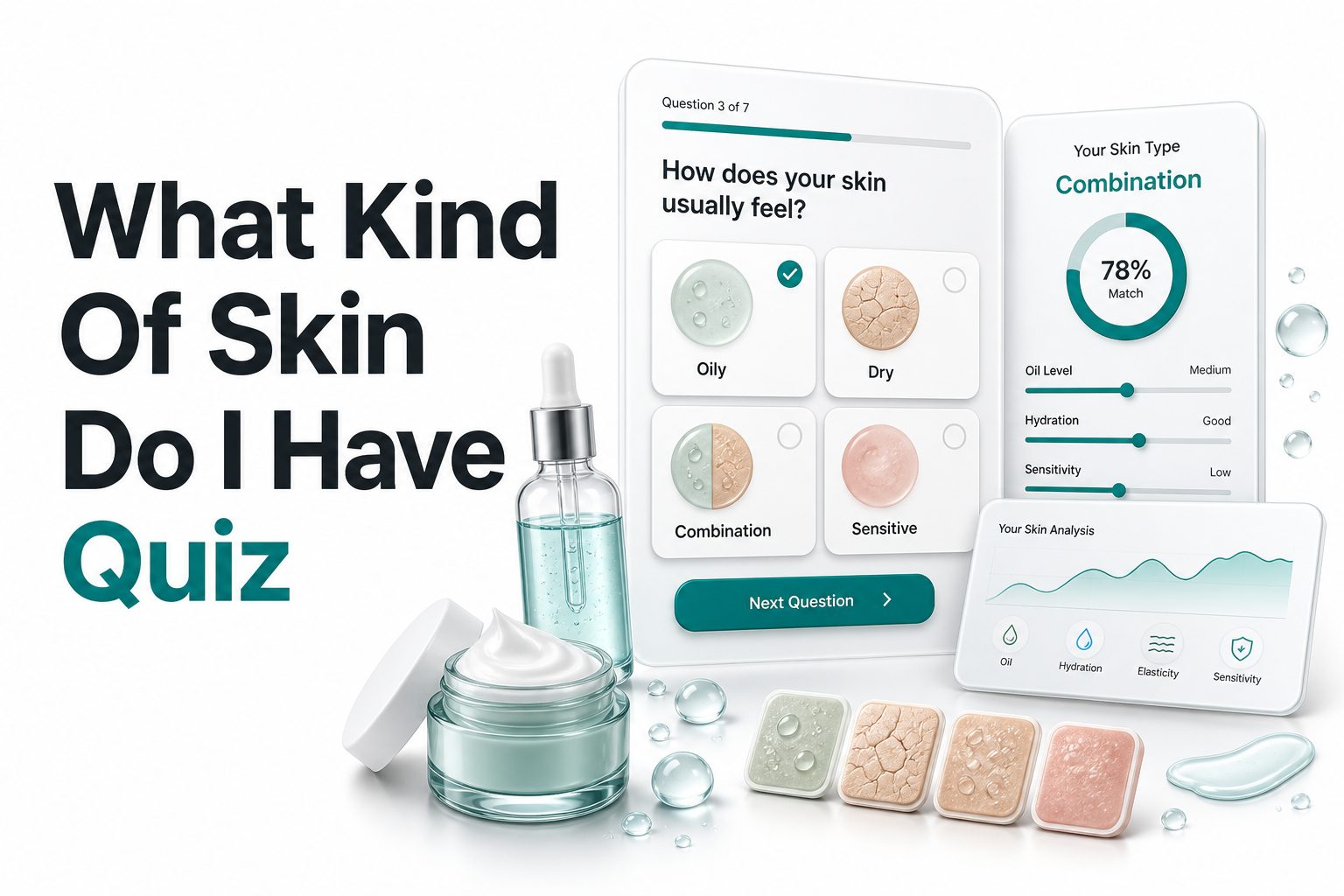
Finding your skin type sounds simple until your face changes from shiny at noon to tight by bedtime. One product works beautifully for a week, then suddenly feels heavy, drying, or irritating. That is why a what kind of skin do i have quiz can be so helpful. It gives you a clear starting point before you spend money on cleansers, moisturizers, serums, or treatments that may not suit your skin.
Your skin type affects how your face reacts to weather, hormones, stress, makeup, sunscreen, and active ingredients. When you know whether your skin is oily, dry, combination, sensitive, or balanced, your routine becomes easier to build and easier to adjust. This article will help you read your skin more accurately, use a simple quiz-style method at home, and choose products with more confidence.
Why Knowing Your Skin Type Matters
Your skin type is the foundation of your skincare routine. A rich cream may comfort dry skin but feel greasy on oily skin. A foaming cleanser may help excess oil but leave dry or sensitive skin tight, red, and uncomfortable after washing.
When you know your skin type, you can stop guessing. You will be better at choosing textures, ingredients, and routines that match your daily needs. This also helps reduce irritation, clogged pores, flaky patches, and the frustration of products that never seem to work.
The Main Skin Types
Most people fall into one of five broad skin types: oily, dry, combination, sensitive, or normal. These categories are not perfect labels, but they are useful. They describe how your skin behaves most of the time when it is clean and not overloaded with products.
Your skin type can also shift over time. Age, seasons, medication, hormones, climate, and lifestyle can all affect your skin. That means the answer to a what kind of skin do i have quiz may change, especially if your routine or environment changes.
Quick Skin Type Clues
- Oily skin often looks shiny and may have visible pores.
- Dry skin can feel tight, rough, flaky, or uncomfortable.
- Combination skin is oily in some areas and dry or normal in others.
- Sensitive skin reacts easily with redness, stinging, burning, or itching.
- Normal skin feels balanced, comfortable, and fairly consistent.
- Dehydrated skin lacks water and can happen with any skin type.
How to Take a Skin Type Quiz at Home
Start with a gentle cleanser and wash your face as usual. Pat your skin dry, then avoid applying toner, serum, moisturizer, sunscreen, or makeup for about one hour. This gives your skin enough time to show its natural oil pattern.
After one hour, look closely in natural light. Notice whether your forehead, nose, and chin look shiny. Pay attention to tightness around your cheeks, flaking near the mouth, redness, stinging, or rough texture. These clues can help you answer quiz-style skin type questions honestly.
The Bare-Face Test
The bare-face test is one of the simplest ways to identify your skin type. If your whole face becomes shiny quickly, you may have oily skin. If your face feels tight or looks flaky, dry skin is more likely.
If only your T-zone gets oily while your cheeks stay normal or dry, you may have combination skin. If your skin feels comfortable and does not show much shine, tightness, or irritation, it may be normal. Frequent burning or redness points toward sensitivity.
The Blotting Sheet Test
A blotting sheet test can make oil levels easier to see. Press a clean blotting paper against your forehead, nose, cheeks, and chin. Hold it up to the light and compare how much oil appears from each area.
Heavy oil from most areas suggests oily skin. Little to no oil, especially with tightness, suggests dry skin. Oil mainly from the nose and forehead suggests combination skin. This test is quick, but it should be paired with how your skin feels.
At-Home Skin Quiz Checklist
- Wash your face with a gentle cleanser.
- Wait one hour without applying products.
- Check for shine across the forehead, nose, cheeks, and chin.
- Notice tightness, roughness, flakes, or dullness.
- Watch for redness, stinging, or itching.
- Repeat the test in a different season if your skin changes.
- Compare your results with how your skin behaves during a normal day.
Signs You Have Oily Skin
Oily skin produces more sebum than your face needs for comfort and protection. This can make the skin look shiny, especially across the T-zone. Makeup may break down quickly, and pores can appear larger around the nose, cheeks, or forehead.
Oily skin is not dirty skin, and it does not need harsh scrubbing. In fact, stripping cleansers can make the skin feel stressed. A balanced routine usually works better, with lightweight hydration, gentle cleansing, and non-comedogenic products.
Best Routine for Oily Skin
A gel or light foaming cleanser can help remove excess oil without leaving your face tight. Follow with a lightweight moisturizer, even if your skin feels greasy. Skipping moisturizer may make your skin feel unbalanced and uncomfortable.
Look for ingredients like niacinamide, salicylic acid, green tea, and lightweight humectants. Use exfoliating acids carefully, not all at once. Sunscreen should be oil-free or gel-based if heavier formulas feel too slick during the day.
Signs You Have Dry Skin
Dry skin does not produce enough oil to keep the barrier comfortable. It may feel tight after washing and look dull or rough. Flaking can appear around the nose, cheeks, brows, or mouth, especially in cold weather or after strong skincare products.
Dry skin often needs richer textures and barrier support. Cream cleansers, nourishing moisturizers, and ingredients like ceramides, squalane, glycerin, and hyaluronic acid can help. The goal is to reduce water loss and keep the skin feeling soft.
What Dry Skin Should Avoid
Dry skin usually struggles with harsh cleansers, strong alcohol-based toners, and over-exfoliation. A product that leaves your face squeaky-clean may seem effective, but it often removes too much oil from skin that already lacks it.
Hot water can also make dryness worse. Wash with lukewarm water, apply moisturizer while skin is slightly damp, and use sunscreen daily. For more routine support, see [Internal Link: Best Moisturizer for Dry Skin].
Oily vs Dry Skin Comparison
Skin Feature | Oily Skin | Dry Skin
Shine | Appears across much of the face | Usually minimal
Pores | Often look larger | Often look smaller
After cleansing | May feel clean, then oily again | Often
Common concern | Greasiness and clogged pores | Flaking and
Best texture | Gel, lotion, lightweight cream | Cream,
Helpful ingredients | Niacinamide, salicylic acid, green tea | Ceramides, glycerin, squalane
Signs You Have Combination Skin
Combination skin has both oily and dry or normal areas. The most common pattern is an oily T-zone with cheeks that feel balanced, dry, or sensitive. This skin type can be tricky because one product may work well on one area but not another.
A what kind of skin do i have quiz often points people to combination skin when their answers seem mixed. That is normal. Combination skin usually needs flexible skincare, with lighter products on oily areas and more cushioning products where skin feels dry.
How to Care for Combination Skin
Use a gentle cleanser that does not strip the cheeks or leave the T-zone greasy. A lightweight moisturizer can work for the whole face, but you may need to add a richer cream only to dry spots at night.
Targeted treatments are helpful for combination skin. For example, use salicylic acid only where pores clog easily. Apply a barrier cream to dry patches instead of covering the entire face with a heavy product that may overwhelm oily areas.
Signs You Have Sensitive Skin
Sensitive skin reacts more easily than other skin types. You may notice burning, stinging, redness, itching, or warmth after applying products. Fragrance, exfoliating acids, retinoids, weather changes, and even some sunscreens can trigger discomfort.
Sensitivity can be a skin type, a temporary condition, or a sign of a weakened barrier. If your skin suddenly reacts to products it used to tolerate, your routine may be too aggressive. Scaling back often helps the skin settle.
How to Calm Sensitive Skin
Keep your routine short when your skin feels reactive. Use a gentle cleanser, a plain moisturizer, and a mineral or sensitive-skin sunscreen. Avoid introducing several new products at once, because it becomes hard to identify the cause of irritation.
Patch testing is especially useful. Apply a small amount of product near the jaw or behind the ear for a few days before using it on your whole face. For more help, read [Internal Link: Sensitive Skin Care Routine].
Sensitive Skin Care Tips
- Choose fragrance-free products when possible.
- Avoid scrubs with rough particles.
- Introduce active ingredients slowly.
- Keep exfoliation minimal during flare-ups.
- Use lukewarm water instead of hot water.
- Patch test new products before full use.
- Stop using any product that causes strong burning or swelling.
Normal Skin and What It Really Means
Normal skin is balanced most of the time. It is not overly oily, very dry, or easily irritated. Pores may be visible but not a major concern, and the skin usually feels comfortable after cleansing and throughout the day.
Normal skin still needs care. It can become dry, congested, or sensitive if treated too aggressively. A simple routine with cleansing, moisturizing, sunscreen, and occasional targeted treatments is usually enough to keep it steady.
How to Maintain Balanced Skin
The best approach for normal skin is consistency. Use a gentle cleanser, a comfortable moisturizer, and broad-spectrum sunscreen each morning. At night, cleanse well and apply a moisturizer that suits the season and your comfort level.
You can add treatments for specific goals, such as uneven tone or early fine lines, but introduce them slowly. Normal skin does not need a crowded shelf. Too many strong products can create problems that were not there before.
Skin Type vs Skin Condition
Skin type describes your natural oil pattern. Skin condition describes temporary or changing concerns, such as dehydration, acne, redness, dullness, or a damaged barrier. Mixing these up is one reason people choose the wrong products.
For example, oily skin can be dehydrated, and dry skin can still break out. Sensitive skin can also be oily or combination. A good skin type quiz should help separate your baseline skin type from current concerns that may need separate care.
Dehydrated Skin Signs
Dehydrated skin lacks water, not oil. It can feel tight, look dull, show fine surface lines, and still get shiny during the day. This confuses many people because they assume shine always means enough moisture.
Humectants like glycerin and hyaluronic acid can help draw water into the skin, while moisturizers help seal it in. If your skin feels oily and tight at the same time, dehydration may be part of the problem.
Acne-Prone Skin Signs
Acne-prone skin means your pores clog or inflame easily. This can happen with oily, dry, combination, or sensitive skin. Breakouts alone do not define your skin type, so it is important to look at oil levels and comfort too.
Non-comedogenic products, gentle cleansing, and targeted ingredients like salicylic acid, benzoyl peroxide, or adapalene may help. If acne is painful, persistent, or leaving marks, it is worth speaking with a dermatologist for a clearer plan.
Skin Conditions That Can Affect Quiz Results
Skin Condition | How It Can Confuse Results | Helpful First
Dehydration | Skin feels tight but also oily | Add
Over-exfoliation | Redness and flakes mimic dryness | Pause
Acne | Breakouts may be mistaken for oily skin | Check oil
Rosacea-prone redness | Sensitivity may seem
Seasonal dryness | Winter skin may look naturally dry |
Barrier damage | Burning can appear suddenly | Simplify
Common Mistakes When Identifying Skin Type
One common mistake is judging your skin immediately after washing. Cleansers can temporarily change how your face feels. A strong cleanser may make oily skin feel dry for a short time, while a creamy cleanser may leave dry skin feeling coated.
Another mistake is relying on one bad product experience. A moisturizer that breaks you out does not always mean you have oily skin. It may simply be too heavy, fragranced, or incompatible with your routine.
Product Texture Clues
Texture matters as much as ingredients. Gels and fluids often suit oily or combination skin, while creams and balms usually work better for dry skin. Lotions sit between the two and can be helpful for normal or combination skin.
If a product pills, feels greasy, or never absorbs, the texture may not suit your skin. If a product disappears quickly and your face feels tight soon after, it may be too light. Adjust texture before changing your entire routine.
Seasonal Skin Changes
Your skin may act differently in summer than in winter. Heat and humidity can make skin oilier, while cold air and indoor heating often make it drier. A quiz result from July may not perfectly match your skin in January.
Instead of changing everything each season, adjust one or two products. Switch from gel moisturizer to lotion in cooler months, or use a lighter sunscreen in hot weather. Small changes are often enough.
Practical Skin Type Routine Tips
- Keep a basic routine for two weeks before judging results.
- Change only one product at a time.
- Match product texture to your comfort level.
- Use sunscreen daily, regardless of skin type.
- Avoid harsh scrubbing if your skin feels congested.
- Do not skip moisturizer because your skin is oily.
- Retake your skin quiz when seasons or hormones shift.
Ingredients That Work for Each Skin Type
Ingredients are easier to choose once you know your skin type. Oily skin often does well with niacinamide, salicylic acid, and lightweight hydrators. Dry skin usually benefits from ceramides, fatty acids, glycerin, and nourishing oils in balanced formulas.
Sensitive skin often needs fewer ingredients, not more. Normal skin can tolerate a wider range but still needs moderation. Combination skin may use different ingredients on different zones, especially when the T-zone and cheeks behave very differently.
Ingredients to Use Carefully
Retinoids, exfoliating acids, vitamin C, benzoyl peroxide, and strong acne treatments can be useful, but they can also irritate skin if overused. Start slowly and avoid layering too many active products in one routine.
If your skin burns, peels, or feels sore, reduce frequency or pause the product. Active ingredients should improve skin over time, not leave it constantly uncomfortable. A steady routine usually beats an aggressive one.
Building a Routine After Your Quiz
Once you have your quiz result, build a routine around cleanser, moisturizer, and sunscreen first. These basics support every skin type. Treatments can come later, once your skin feels stable and you know how it reacts.
Morning routines should focus on protection and comfort. Evening routines can focus on cleansing and repair. If you wear makeup or water-resistant sunscreen, cleanse thoroughly at night, but avoid stripping the skin until it feels tight.
Sample Routine by Skin Type
Oily skin may prefer a gel cleanser, lightweight moisturizer, and matte or fluid sunscreen. Dry skin may prefer a cream cleanser, richer moisturizer, and hydrating sunscreen. Combination skin can mix textures depending on facial zones.
Sensitive skin should start with fragrance-free basics and add treatments slowly. Normal skin can use a balanced cleanser, lotion or cream, and sunscreen. The best routine is the one your skin tolerates and you can follow consistently.
Product Match Table
Skin Type | Cleanser | Moisturizer | Treatment Focus
Oily | Gel or gentle foam | Lightweight gel-cream | Oil
Dry | Cream or hydrating cleanser | Rich cream | Barrier
Combination | Gentle gel or lotion cleanser | Light lotion plus spot cream | Zone-based care
Sensitive | Mild fragrance-free cleanser | Simple barrier
Normal | Balanced gentle cleanser | Lotion or medium cream
When to Retake a Skin Type Quiz
Retake your quiz when your skin changes for more than a few weeks. Temporary dryness after a facial, breakout after a new product, or oiliness during a heat wave may not mean your skin type has fully changed.
Major shifts can happen with pregnancy, menopause, new medication, moving to a different climate, or changing your skincare routine. If your usual products stop working, a fresh what kind of skin do i have quiz can help you reassess.
When to Ask a Professional
If your skin is painful, inflamed, peeling severely, or breaking out persistently, a quiz is not enough. A dermatologist or licensed skin professional can help identify acne, eczema, rosacea, allergies, or other concerns that need specific treatment.
Professional advice is especially useful if over-the-counter products keep making your skin worse. Bring a list of products you use and note when symptoms started. Clear details make it easier to find the cause.
Signs You Need More Than a Quiz
- Breakouts are painful, cystic, or worsening.
- Redness does not fade or keeps spreading.
- Products sting even when they are labeled gentle.
- Your skin peels, cracks, or bleeds.
- You suspect an allergic reaction.
- Dark marks or scars are increasing.
- Your routine causes constant burning or tightness.
Conclusion
Knowing your skin type gives you a practical starting point for better skincare. It helps you choose products that fit your face instead of following random trends or copying someone else’s routine. Oily, dry, combination, sensitive, and normal skin all need different levels of cleansing, moisture, and care.
The best way to begin is with a clean-face test, a blotting sheet check, and honest observation throughout the day. Pay attention to shine, tightness, flakes, redness, and how your skin feels after products. Remember that skin type and skin condition are not always the same, and your needs can change with seasons, hormones, age, and climate. A what kind of skin do i have quiz can point you in the right direction, but consistent observation will help you fine-tune your routine over time.
FAQ
How can I tell my skin type at home?
Wash your face, wait one hour without products, then check for shine, tightness, flakes, or redness. Oil across the face suggests oily skin, tightness suggests dry skin, and mixed areas suggest combination skin.
Can my skin type change over time?
Yes, your skin type can shift with age, hormones, medication, weather, climate, and skincare habits. If your usual products stop working for several weeks, it may be time to reassess your skin type.
Is sensitive skin a skin type?
Sensitive skin can be a skin type or a temporary condition. If your skin often burns, stings, itches, or turns red after products, treat it gently and introduce new ingredients slowly.
Can oily skin still be dehydrated?
Yes, oily skin can lack water while still producing excess oil. It may feel tight but look shiny. Lightweight hydration with ingredients like glycerin or hyaluronic acid can help balance the feel.
What is the easiest skin type to care for?
Normal skin is usually the easiest because it feels balanced and reacts less often. Still, it needs gentle cleansing, daily sunscreen, and regular moisture to stay healthy and comfortable.
0 Comments